Abstract-- This study was conducted to determine aroma compounds of oven-dried and fresh thyme, and investigate the drying effect in key aroma compounds of thyme samples. Fresh thyme was purchased and utilized for two functions. The first function was for the application of drying methods (fresh thyme was oven dried at 50°C), and the second function to analyze the fresh thyme. After applying solvent direct extraction, volatile compounds were isolated. According to Gas Chromatography-Olfactometry (GC-O) and Gas Chromatography-Mass Spectroscopy (GC-MS) analysis results, lower amount of volatile compounds for dried thyme were identified, while more volatile components were found in fresh thyme.
Keywords-- Dried thyme, GC-Olfactometry (GCO), Gas Chromatography-Mass spectroscopy (GC-MS), oven drying, solvent direct extraction
I. INTRODUCTION
Thyme is a short shrub whose genus (thymus vulgaris L.) contains 350 species of perennial herbaceous plants. Commonly used in soups and sauces, the plant has a strong aromatic odor (Miura and Nakatani, 1989). The leaves and flowers of the plant produce thyme oil, which is used in dental products, inhalants, sprays, lotions, and soap (Baranauskine et al., 2003; Porte, 2008; Usau, 2011). The thymus species are commonly used as herbal teas, flavoring agents, and medicinal mixtures (Diaz, 2005). Polyphenols are the most abundant antioxidants in diets based on fruits and vegetables (Yildiz et al., 2017; Yildiz, 2019; Yildiz and Feng, 2019; Yildiz and Aadil, 2020; Yildiz et al., 2020). The phenolic compounds thymol and isothymol are major volatile compounds distinctive for the T. Vulgaris (L.) species (Yanishlieva et al., 1999; Dorman et al., 2003). Thymol acts as an antiseptic, and has antimicrobial and antioxidative properties (Madsen et al., 1996; Javanmardi et al., 2002; 2003). Fresh thyme has a brighter color, fresh taste and fragrant aroma. On the other hand, dried thyme has a more dull color, and a different aroma and texture compared to fresh (Raghavan, 1995). Aroma compounds are one of the major agents since they effect the quality of food and consumer preferences. Among several chemical compounds, aroma is the most significant agent which defines the organoleptic attributes of food products.
Aroma-active components could be distinguished in the complex structure of many aroma compounds with the help of an olfactometric method. The GC-O technique has made it possible to analyze volatile compounds into aroma-active and/or non-aroma-active compounds based on their concentration in the food samples (Garcia-Gonzalez et al., 2007; Kesen et al., 2013). A significant contributor towards the inspiration to conduct research on thyme stemmed from a descriptive analysis panel conducted in the sensory lab within the Department of Food Science and Human Nutrition (FSHN) at the University of Illinois at Urbana-Champaign. The panel focused on retorted creamy tomato soups, and thyme was one of the attributes selected for the sensory modalities of aroma and aroma-by-mouth. For aroma, dried thyme was specifically selected, and for aroma-by-mouth, a thyme solution (fresh thyme steeped in boiling water) was chosen. Interestingly, there was much discussion regarding the selection of fresh and dried thyme as references for the attribute. This discussion makes sense, since thyme has varying volatile compounds depending on it being in a fresh or dried state. Furthermore, sensory perceptions and individual preference of thyme (aroma) may vary depending on its state.
Various studies have demonstrated that drying is one of the most prevalent technique applied to enhance food stability (Izli et al., 2018; Yildiz and Izli, 2019a; 2019b; 2020). On the other hand, it was stated that the loss of volatile compounds is often related to drying air temperature and time (Abascal et al., 2005). Venskutonis (1997) analyzed the influence of drying on the aroma compounds of the thyme. According to his results, 68 compounds in total were identified in thyme and more than a hundred components were described quantitatively. A significant decrease in the amount of extracted volatiles was observed just in the case of drying at 60 °C, usually as a result of the loss of non-oxygenated monotepenes (Venskutonis, 1997). Additional literature shows that the headspace (HS) volatiles found in thyme was highest for thyme oven-dried at 60°C. The oven-dried thyme (60 °C) was 4.2 times higher than in the fresh thyme, and 19.4 times higher than in the oven-dried thyme (30 °C) (Abascal et al., 2005). So, it might be assumed that thyme leaves go through important changes in their botanical structure at drying at high temperatures. Venskutonis (1997) claimed that oven-drying at 30 °C did not significantly affect the volatile in sage (Salvia officinalis L.) and thyme (Thymus vulgaris L.), however drying at 60 °C led to a significant loss of volatiles (Venskutonis, 1997). Though oven drying can cause observation of lower volatiles in dried thymes compare to fresh thymes, the effect of oven drying at 50 °C has not been well documented. To the best of our knowledge, no study has so far been reported to compare the key odorants of dried and fresh thymes using Gas Chromatography-Olfactometry and Gas Chromatography-Mass Spectroscopy. Therefore, the current study had three purposes: (1) identify aroma compounds of thymus vulgaris L. by Gas Chromatography-Olfactometry (GC-O) and Gas Chromatography-Mass Spectroscopy (GC-MS) analysis (2) describe aroma-active compounds of thymus vulgaris L. using aroma extract dilution analysis (AEDA) with the help of GC-O; and (3) determine the effect of drying in aroma compounds of thyme at 50°C.
II. METHODS
A. Chemicals
Standard aroma compounds used in the work were supplied from Sigma Chemicals Co. (St. Louis, MO, USA).
B. Sample preparation
Fresh thyme was purchased from Schnuck’s grocery store in Urbana, IL. Fresh thyme leaves were stored in the refrigerator located in the Agricultural Bioprocess Laboratory (ABL) at University of Illinois at Urbana-Champaign at 4°C before drying experiments. The sample was divided into two portions. One portion (20 g) was used to apply the drying treatment (oven-dried in the degree of 50oC for 12 hours) and the second portion (20 g) was used to analyze the fresh thyme leaves.
C. Isolation of volatiles
Direct solvent extraction was applied with CH2Cl2 (dichloromethane) using 6-undecanone and 4-tert-Amylphenol as internal standards for determination of volatile flavor components in thyme samples (Cequier-Sánchez et al., 2008).
D. Dried thyme procedure
A 22.56 g of fresh thyme was oven-dried at 50oC for 12 hours. The net weight of the oven-dried thyme was 6.57 g. Approximately 1 g (1.011 g) of dried thyme was weighed. The internal standards used were 6-undecanone and 4-tert-Amylphenol. These internal standards were used since they have similar chemical structures to thymol (Thyme has 20-54 % thymol) (Miura and Nakatani, 1989). 50 mg (46.7 mg) 6-undecanone was weighed and 10 ml methanol was added, followed by the same procedure for 4-tert-Amylphenol {50 mg (49.3 mg) 4-tert-amylphenol + 10 ml methanol}. The 1.011 g of thyme was placed into a glass tube, and 50 mL solvent was added CH2Cl2 (dichloromethane) + 0.1 mL 6-undecanone mixture + 0.1 mL 4-tert-Amylphenol mixture}. This mixture was homogenized using the Ultra Turrax IKA T18 basic machine (10000 rpm, speed 2, 1 min). The sample was then placed in the centrifuge for 10 minutes (2500 rpm), and filtered with filter paper (No. 4). The sample was concentrated to 10 ml at 44oC (time took around 3 hours). Approximately 2 g (2.01 g) of sodium sulfate was weighed and put into the oven. The sample was passed through 2 g sodium sulfate, resulting in a homogenized and concentrated mixture. The mixture was put in the refrigerator for overnight storage, and removed the following day for GC-olfactometry (GCO) and Gas Chromatography-Mass spectroscopy (GC-MS) analysis. Both GCO and GC-MS analysis were conducted for experimental analysis. For GC-MS analysis, a HP5890 Series II GC/HP 5972 mass selective detector (MSD, Hewlett-Packard) was used. An HP5890 series II gas chromatograph (Hewlett-Packard, PaloAlto, CA) equipped with a a sniffing port was used for gas chromotography-olfactometry. The GC-O was a Rtx-Wax column (15m length, 0.53 mm internal diameter, 1um film thickness), and the GC-MS was a Stabil wax column (30m length, 0.25 mm internal diameter, 0.25 um film thickness). This procedure was constructed based on prior information pertaining to extraction of volatile compounds in fresh herbs (Yousif et al., 2000; Lee et al., 2005).
E. Fresh thyme procedure
The same procedure was followed for fresh thyme as with dried thyme. The major difference was that in order to preserve volatiles in the fresh thyme, liquid nitrogen (LN2) method was applied. Approximately 10 g (10.02 g) of fresh thyme leaves were weighed into a glass tube, and 10 g (9.72 g) of saturated salt (sodium chloride) was added. 10 mL of the internal standard solutions (6-undecanone and 4-tert-Amylphenol) were added. The sample was placed in liquid nitrogen for 5 minutes. The sample was then grinded. 50 mL solvent (dichloromethane) was added. The Ultra Turrax IKA T18 basic machine was used to get homogenized mixture (1 min and speed 2, 10000 rpm). The sample was then placed in the centrifuge for 10 minutes (2500 rpm). The sample was filtered with filter paper (No. 4). After filtration, the sample was concentrated to 10 ml at 44oC (time took around 3 hours). Approximately 2 g (2.01 g) of sodium sulfate was weighed and put into the oven. The sample was passed through 2 g sodium sulfate, resulting in a homogenized and concentrated mixture. The mixture was put in the refrigerator for overnight storage, and removed the following day for GC-olfactometry (GCO) and Gas Chromatography-Mass spectroscopy (GC-MS) analysis. Both GCO and GC-MS analysis were conducted for experimental analysis. The GC-O was a Rtx-Wax column (15m length, 0.53 mm internal diameter, 1um film thickness), and the GC-MS was a Stabil wax column (30m lenght, 0.25 mm internal diameter, 0.25 um film thicknes).
F. Aroma Extraction Dilution Analysis (AEDA)
Aroma extract dilution analysis of solvent extract fractions was
conducted using an HP6890 series GC (Agilent Technologies Inc., Palo Alto, CA).
AEDA, a stepwise dilution of the original aroma extract, was conducted on both
fresh and dried thyme in order to characterize the key aroma compounds and
evaluate the odor activity
Table 1. Odor Compounds in Dried and Fresh Thyme
1Odor description as perceived by panelists during olfactometry. 2Linear retention index calculated on DB-WAX capillary column. 3Flavor dilution (FD) factor is the highest dilution of the extract at which an odorant was detected by aroma extract dilution analysis.
more consistently. Without conducting AEDA, there would have been a large variation with the amount of product analyzed, as well as the amount of sample separated by gas chromatography. In shortly, the condensed aroma extracts were diluted in several ratios such as 1:1, 1:2, 1:4, 1:8, 1:16, …, 1:1024, by using dichlorometane. The individual aroma extracts were smelled by 3 experienced panelists (Schieberle and Grosch,1987). Sniffing of diluted extracts was maintained till there was no odor sense. The perceived odor was described as flavor dilution (FD) factor, such as 2, 4, 8, …, 1024, etc., corresponding to the above ratios. The higher the FD factor value of aroma-active compound, the more effect on the aroma profile (Fickert and Schieberle, 1998; Tairu et al., 2000).
III. RESULTS
A. Identification of compounds
There were several key compounds detected through the GC-O and GC-MS (retention index was compared to FlavorNet) (Cadwallader, 2012). Thymol, a key phenolic compound in thyme was detected at FD 5 (RI 2046). Carcravol, another phenolic compound commonly found in oregano was detected at FD 5 (RI 2059, 2091) (Table 1). It should be noted that, for the fresh thyme, the odor threshold for thymol was exceptionally high, and could not be detected in the fresh thyme.
The constituents of the volatile compounds were identified and compared for their retention indices to n-alkanes as well as their mass spectra for the fresh versus dried thyme. Peaks in volatile compounds were similar for both fresh and dried thyme. Two terpenes (found in essential oils in plants), ɣ-terpinene and o-Cymene (found in thyme oil), were identified for both fresh and dried thyme (Fig. 1 and 2).
H. Quantification of Thymol
In order to
account for the moisture content of the fresh thyme (which resulted in a lower
FD factor than dried thyme), we quantified the amount of thymol (the principal
volatile component found in both fresh and dried thyme) in the fresh and dried
thyme. We used the internal
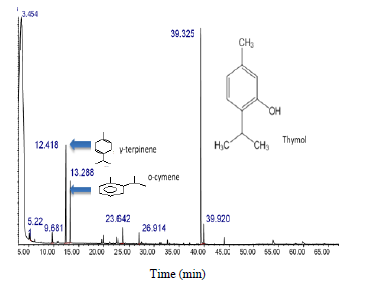
Figure 1: Gas chromatography-mass spectrometry (GC-MS) chromatogram of Fresh Thyme
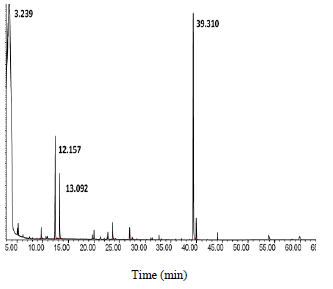
Figure 2: Gas chromatography-mass spectrometry (GC-MS) chromatogram of Dried Thyme
Table
2. Thymol Quantification

*The odor activity (OAV) were obtained by dividing concentration of the compounds by their threshold 1-Internal Standard, 4 tert-amylphenol (Ion 135) 2-area under peak 3-Thymol concentration (ppb) 4- TT=Thymol threshold (ppb).
standard of 4-tert-amylphenol because its phenolic structure was similar to the thymol. The internal standard had the largest characterizing peak at ion 135, and we compared that area under the peak to the area under the thymol peak in both fresh and dried. As expected, the thymol concentration of the fresh peak is almost three times the concentration of the dried thyme as a result of the moisture content. The odor activity value was determined (Thymol Odor & Flavor Detection Thresholds, 2018).
IV. CONCLUSIONS
Key findings from this research showed that thymol and carvacrol were key compounds in both samples for fresh and dry thyme. Additionally, ɣ-terpinene and o-Cymene were found in similar quantities in both fresh and dry thyme. It was also observed that, based on GC-O data, the process of drying influenced the FD factors. The fresh thyme had a FD factor of 3 because of its moisture content, and the dried thyme had a FD factor of 5. Furthermore, the GC-O results showed that the fresh thyme had a high odor threshold, and the smell of thymol (key volatile component) was not able to be detected in fresh thyme on the GC-O. Oven drying may lead to observe lower volatile compounds in dried thyme compared to fresh thyme. However, more detailed analysis based on different drying techniques such as freeze-drying, sun-drying and different temperatures such as 30oC and 40 oC should be made to fully understand the drying effect in aroma compounds of thyme.
REFERENCES
Abascal, K., Ganora, L., and Yarnell, E. (2005) The Effect of Freeze-drying and its Implications for Botanical Medicine: A Review. Phytother. Res. 19, 655–660.
Baranauskiene, R., Venskutonis, P.R., Viskelis, P., and Dambrauskiene, E. (2003) Influence of nitrogen fertilizers on the yield and composition of thyme (Thymus vulgaris). J. Agric. Food Chem. 51, 7751–7758.
Cadwallader, K. (2012) Compound Identification by GC, GC-O, and GC-MS techniques, General procedures. FSHN 519 Flavor Chemistry and Analysis. Laboratory orientation.
Cequier-Sánchez, E., Rodríguez, C., Ravelo, A.G., and Zárate, R. (2008) Dichloromethane as a solvent for lipid extraction and assessment of lipid classes and fatty acids from samples of different natures. J. Agric. Food Chem. 56, 4297‐4303.
Diaz, M.C. (2005) Volatile components and key odorants of fennel (Foeniculum vulgare Mill.) and thyme (Thymus vulgaris L.) oil extracts obtained by simultaneous distillation-extraction and supercritical fluid extraction. J. Agric. Food Chem. 53, 5385-5389.
Dorman, H.J.D., Peltoketo, A., Hiltunen, R., and Tikkanen, M.J. (2003) Characterisation of the antioxidant properties of de- odourised aqueous extracts from selected Lamiaceae herbs. Food Chem. 83, 255–262.
Fickert, B., and Schieberle, P. (1998) Identification of the key odorants in barly malt (caramalt) using GC/MS techniques and odour dilution analyses. Nahrung. 42, 371–375.
Garcia-Gonzalez, D.L., Tena, N., and Aparicio, R. (2007) Characterization of olive paste volatiles to predict the sensory quality of virgin olive oil. Eur. J. Lipid Sci. Technol. 109, 663–672.
Izli, G., Izli, N., Taskin, O., and Yildiz, G. (2018) Convective drying of kumquat slices: Comparison of different drying temperatures on drying kinetics, colour, total phenolic content and antioxidant capacity. Lat. Am. Appl. Res. 48, 37-42.
Javanmardi, J., Khalighi, A., Kashi, A., Bais, H.P. and Vivanco, J.M. (2002) Chemical characterization of basil (Ocimum basilicum L.) found in local accessions and used in traditional medicines in Iran. J. Agric. Food Chem. 50, 5878–5883.
Javanmardi, J., Stushnoff, C., Locke, E.. and Vivanco, J.M. (2003) Antioxidant activity and total phenolic content of Iranian Ocimum accessions. Food Chem. 83, 547–550.
Kesen, S., Kelebek, H., Sen, K., Ulas, M. and Selli, S. (2013) GC–MS–olfactometric characterization of the key aroma compounds in Turkish olive oils by application of the aroma extract dilution analysis. Food Res. Int. 54, 1987–1994.
Lee, S.J., Umano, K., Shibamoto, T., and Lee, K.G. (2005) Identification of volatile components in basil (Ocimum basilicum L.) and thyme leaves (Thymus vulgaris L.) and their antioxidant properties. Food Chem. 91, 131-137.
Madsen, H.L., Nielsen, B.R., Bertelsen, G., and Skibsted, L.H. (1996) Screening of antioxidative activity of spices. A comparison between assays based on ESR spin trapping and electrochemical measurement of oxygen consumption. Food Chem. 57, 331–337.
Miura, K. and Nakatani, N. (1989) Antioxidative activity of flavonoids from thyme (Thymus vulgaris L.). Agric. Biol. Chem. 53, 3043–3045.
Porte, A. (2008) Chemical composition of Thymus vulgaris L. (thyme) essential oil from the Rio de Janeiro State (Brazil). J. Serb. Chem. Soc. 73, 307-310.
Raghavan, B. (1995) Flavor quality of fresh and dried Indian thyme (Thymus vulgaris L.). Pafai Journal. 17, 9-14.
Schieberle, P., and Grosch, W. (1987) Evaluation of the flavour of wheat and rye crust by aroma extract dilution analysis. Z. Lebensm. Unters. Forsch. 185, 111–113.
Tairu, A.O., Hofmann, T., and Schieberle, P. (2000) Studies on the key odorants formed by roasting of wild mango seeds (Irvingia gabonensis). J. Agric. Food Chem. 48, 2391–2394.
Thymol Odor & Flavor Detection Thresholds (2018) Accessed on December 2, 2018.
Usau, M. (2011) Influence of different stabilizing operations and storage time on the composition of essential oil of thyme (Thymus officinalis L.) and rosemary (Rosmarinus officinalis L.). LWT – Food Sci. Technol. 44, 244-249.
Venskutonis, P.R. (1997) Effect of drying on the volatile constituents of Thyme (Thymus vulgaris L.) and sage (Salvia officinalis L.). Food Chem. 59, 219–227.
Yanishlieva, N.V., Marinova, E.M., Gordon, M.H., and Raneva, V.G. (1999) Antioxidant activity and mechanism of action of thymol and carvacrol in two lipid systems. Food Chem. 64, 59–66.
Yildiz, G., Andrade, J., Engeseth, N.C., and Feng, H. (2017) Functionalizing soy protein nano-aggregates with pH-shifting and mano-thermo-sonication. J. Colloid Interface Sci. 505, 836-846.
Yildiz, G. (2019) Application of ultrasound and high pressure homogenization against high temperature-short time in peach juice. J. Food Process Eng. 42, e12997.
Yildiz, G., and Feng, H. (2019) Sonication of Cherry Juice: Comparison of Different Sonication Times on Color, Antioxidant Activity, Total Phenolic and Ascorbic Acid Content. Lat. Am. Appl. Res. 49, 255-260.
Yildiz, G., and Izli, G. (2019a) The effect of ultrasound pretreatment on quality attributes of freeze-dried quince slices: Physical properties and bioactive compounds. J. Food Process Eng. 42, e13223.
Yildiz, G., and Izli, G. (2019b) Influence of microwave and microwave-convective drying on the drying kinetics and quality characteristics of pomelo. J. Food Process Preserv. 43, e13812.
Yildiz, G., and Aadil, R.M. (2020) Comparison of high temperature-short time and sonication on selected parameters of strawberry juice during room temperature storage. J. Food Sci. Technol. 57, 1462-1468,
Yıldız, G., and İzli, G. (2020) Gıdaların Kurutulmasında Mikrodalga ve Sıcak Hava Yöntemleri. Ankara, Turkey: Iksad International Publishing House.
Yildiz, G., Izli, G., and Aadil, R.M. (2020) Comparison of chemical, physical, and ultrasound treatments on the shelf life of fresh‐cut quince fruit (Cydonia oblonga Mill.). J. Food Process Preserv. 44, e14366.
Yousif, A.N., Durance, T.D., Scaman, C.H., and Girard, B. (2000) Headspace volatiles and physical characteristics of vacuum-microwave, air and freeze-dried oregano (Lippia berlandieri Schauer). J Food Sci. 65, 926–930.
Received: September 21, 2019
Sent to Subject Editor: September 24, 2019
Accepted: October 25, 2020
Recommended by Subject Editor María Luján Ferreira